Author: Travis

  • Standing Firm in the Gospel of Christ

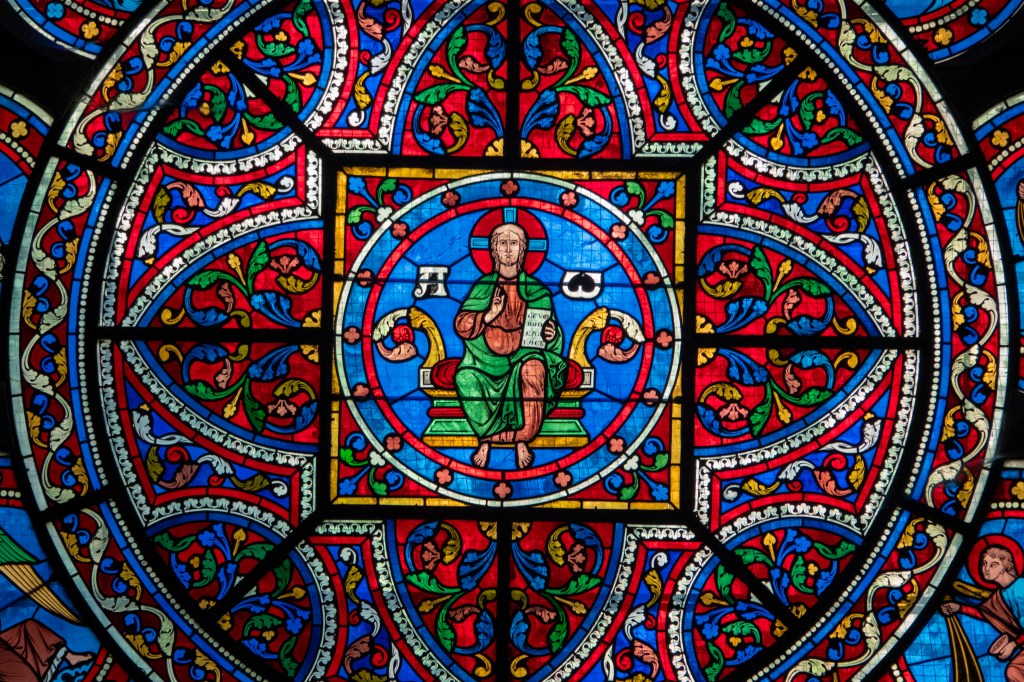
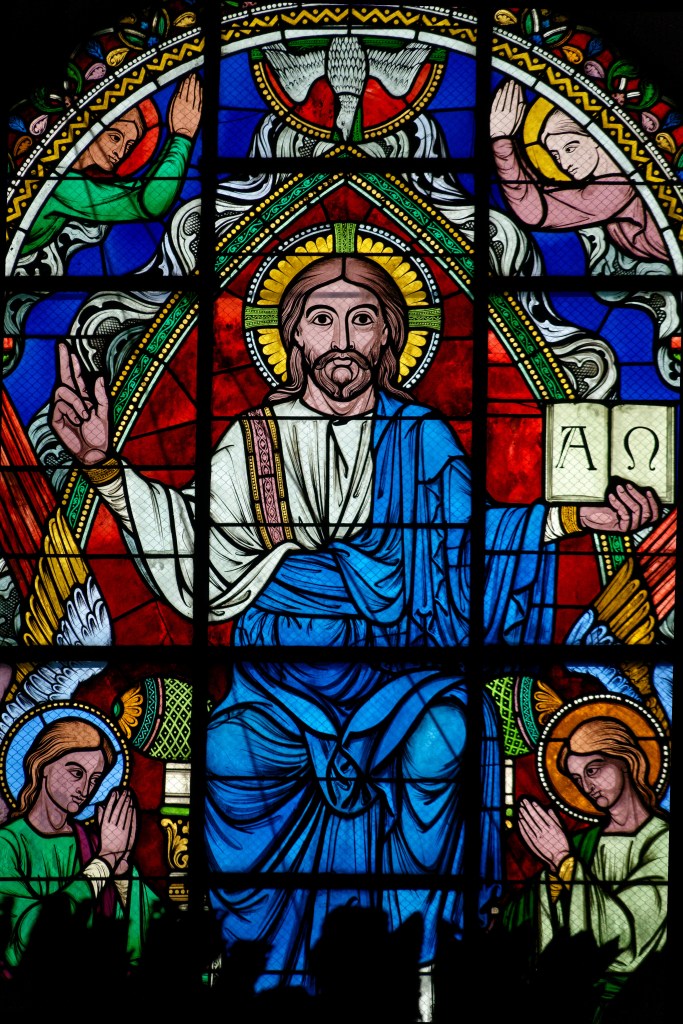
    2024-06-17, Cathédrale Saint Pierre – Angoulème, France: Stained glass (19th century) of Christ in Majesty or Christ in Glory.

    How can we maintain our hope in times where it seems like the world is unraveling in front of us? How do we continue when it seems that even truth itself is being rewritten to serve earthly powers? St. Paul tells us, “Only let your manner of life be worthy of the gospel of Christ … stand firm in one spirit, with one mind striving side by side for the faith of the gospel.” (Philippians 1:27) But how can we trust that if we live our lives worthy of the gospel that it will be enough when people who stand against truth seem to win? 

    One answer to the question can be found in the Old Testament, in a book that St. Paul would have known well. In the book of Daniel, we see the answer to the question of good versus evil. In chapter two Daniel is brought to King Nebuchadnezzar to interpret a dream the king had. The dream showed a statue made of many materials being crushed by a stone not made by human hands. Daniel interprets the dream as four kingdoms which shall rise and fall which he states, “And in the days of those kings the God of Heaven will set up a kingdom which shall never be destroyed, nor shall its sovereignty be left to another people.” (Daniel 2:44) After the passing of the four kingdoms God will establish his own kingdom that will have no earthy leader and can never be defeated. Kingdoms and countries may rise and fall throughout history, but despite how opposed to truth these governments are they shall not stand. However, we must first endure the earthly kingdoms before receiving consolation in the inheritance of the Heavenly Kingdom, but we will not be left alone in these times of the earthly rulers.

    We are shown that even when we are wrongfully persecuted under the rule of earthly powers we are still protected and guided by God. In Daniel chapter three we are shown that Shadrach, Meshach, and Abednego are bound and tossed into a fiery furnace to be consumed by the fires due to the three refusing to worship a golden idol. During the time in the furnace the three pray to God that they might be forgiven of their sins and that mercy be imparted upon them. To which an angel of the Lord was sent down to them in the furnace and not a flame touched the three. When the three men came out of the furnace it was stated, “the fire had not had any power over the bodies of those men, the hair of their heads was not singed, their mantles were not harmed, and no smell of fire had come upon them.” (Daniel 3:27) Even after being in a roaring fire the men emerged with not even the smell of smoke upon them. During our times of trials if we cling to God we are not abandoned. Instead, the Lord is with us and has his hand upon us guiding us through so that as we pass through our trials, we are not consumed by them. 

    We might say that indeed God may be with us in our trials and that the earthly kingdoms may fall, but what about the faithful that seem to be overtaken by evil? Were their sacrifices for nothing? Again, Daniel provides the answer to this question in chapter seven. In this chapter Daniel has a vison of the end times when God comes to institute his Heavenly Kingdom evil shall not prevail and the sacrifices of the faithful will be preserved. Daniel states, “As I looked, the horns waged war with the saints, and prevailed over them, until the Ancient of Days came, and judgement was given for all the saints of the Most High, and the time came when the saints received the Kingdom.” (Daniel 7:21-22) During this life it might seem that evil is prevailing over us, but at the hour of death when we receive our particular judgement, we will receive the Kingdom of Heaven if we have lived our lives for God by His grace. 

     Given the division in our society, as in the times of St. Paul, we must always live our life worthy of what the Gospel teaches us. So that when the promises given to us through Christ and the prophets are fulfilled in the judgment of Christ, we may be counted among the saints who receive the Kingdom. The reason St. Paul could tell those in his time to stand firm in truth is the same for us today because God has promised that the earthly powers will not stand, He is with us in our trials, and in the end the truth of God will prevail over evil. Let us ask God for the grace to stand strong in the Gospel and in truth that we may be heirs to the Heavenly Kingdom. 
  • The Reality of Spiritual Warfare

    Have we as Christians become blinded to what is happening in the spiritual realm? Throughout Church history the vast majority of people believed in spiritual warfare; that there are battles for our souls from our adversary the devil. However, in the modern age the views on spiritual warfare are rapidly declining. Even recognition that the devil himself is real has faced sharp drop-offs over the last few years. Whether we like to recognize it or not the devil is still roaming the earth and spiritual warfare is still happening. How do we know this? The answer comes from Scripture, because all throughout the New Testament we are warned about the dangers of the devil and the battle for our souls. 

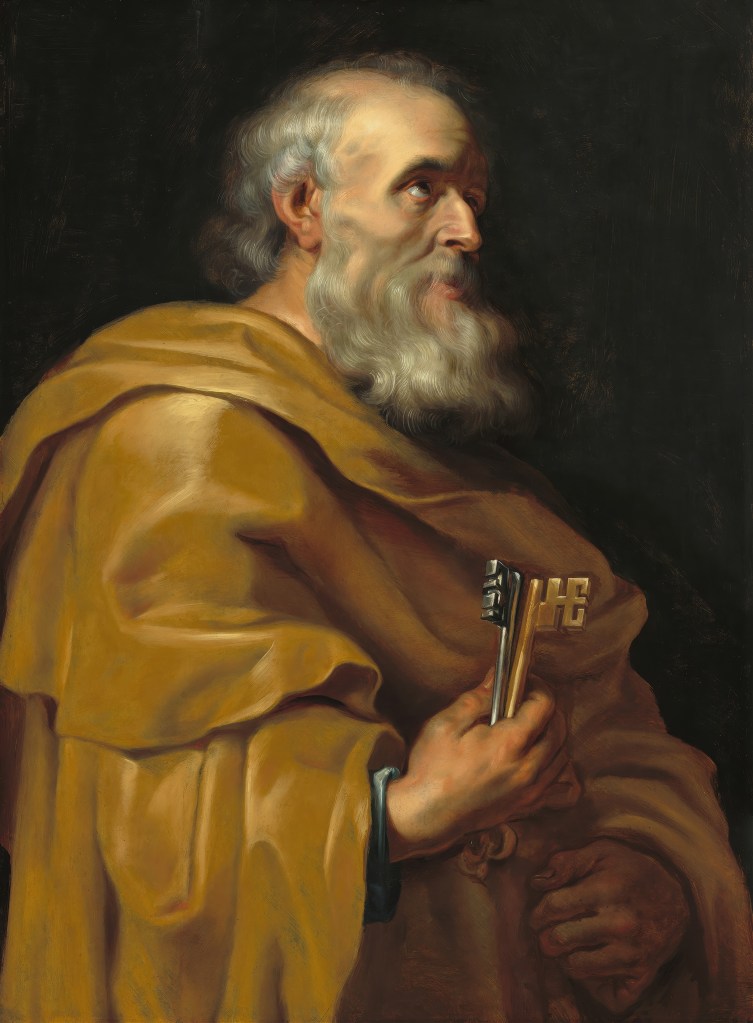
    One explicit warning that spiritual warfare is not a myth comes from 1 Peter. In this letter Peter writes to the Church stating, “Be sober, be watchful. Your adversary the devil prowls around like a roaring lion, seeking someone to devour. Resist him, firm in your faith, knowing that the same experience of suffering is required of your brotherhood throughout the world.” (1 Peter 5:8-9) Peter uses vivid imagery of a roaring lion, an animal that is fast, incredibly smart, and perfect at attacking prey to describe the devil. Peter is trying to warn us that we are up against a being, that compared to our strengths, is far more powerful than us. Then he says, “seeking someone to devour.” Just as the lion hunts its prey, the devil is also on the prowl looking for souls that he can drag down with him and just as the lion is primarily a hunter, so too is the devil. The devil is not bound by our bodily limitations, he is capable of continuous hunting for souls, and he does not rest from it. 

    Peter also reminds us that we are not alone in this. In the opening of the verse Peter doesn’t say “Some People’s adversary” or “My adversary”, He explicitly states it as “Your adversary.” Peter is telling all who are reading this letter, the members of the Church, that their adversary is the devil and that our adversary is looking to claim souls. We are united in this attack and in our sufferings because all of those in Christ are subjected to the same test. This isn’t an optional experience only for those who are exorcist or those of holy faith. As stated by Peter this is a requirement, we may not seek it out but through our faith we will experience trials, struggles, and spiritual warfare but we have hope by standing firm in our faith.  

    As Peter goes on to write, “And after you have suffered a little while, the God of all grace, who has called you to his eternal glory in Christ, will himself restore, establish, and strengthen you.” (1 Peter 5:10) Just as we are not alone in our trials in the physical sense due to all those in Christ being subjected to the trials, we are also not alone in the spiritual sense. We are told by Peter that after only a short time in our trials God will give us the graces to withstand and to battle the powers of darkness. When He does allow the trials of life, He will be with us and strengthen us for the battle by providing the graces we need. 

    The Church also affirms this position in the Catechism which states, “The power of Satan is, nonetheless, not infinite. He is only a creature, powerful from the fact that he is pure spirit, but still a creature. He cannot prevent the building up of God’s reign.” (CCC 395) The Church here is teaching that, yes, Satan (the devil) is more powerful than we are due to his nature; however, even he is subject to God’s authority. Satan should be viewed as our adversary, but this should not cause us distress since he too is still subjected to God. 

    As we go about our lives, we need to recognize that spiritual evil does exist, that it is there tempting us to sin, but we also need to recognize that there is hope so that we do not live in fear. If we do not recognize the devil or the spiritual battle for our souls, we are less likely to feel the urgency to repent and turn back to God and we become comfortable with accepting that the devil does not exist. May we ask God for strength in withstanding the trials of life, recognizing the spiritual enemies, and return to Christ to renew our faith. 

  • How Should We Approach the Eucharist During Mass?

    How should we approach the Sacrament of the most Holy Eucharist during Mass? The answer can be found in the words and actions of Eucharistic Prayer I, especially the Intercession and in the prayers asking God to accept our offering. In these two sections of Eucharistic Prayer I, we can see the roadmap to how we should orientate our hearts and minds before receiving Christ. 

    The first step in approaching the Eucharist is to recognize ourselves as sinners in need of mercy. The first step comes from a perhaps overlooked gesture the priest makes in the Intercession. The priest says, “To us, also, your servants, who, though sinners” and the priest moves his right hand over his heart at the words, “though sinners” to signify that he too is counted among those who are sinners. How powerful is it that after the priest has consecrated the Eucharist he admits with word and gesture that he too is included in those who are sinners. This isn’t to invalidate the consecration, instead it is a reminder that we are all sinners who need mercy.

    The same line goes on to say, “though sinners, hope in your abundant mercies” and the Intercession ends with, “admit us, we beseech you, into their company, not weighing our merits, but granting us your pardon, through Christ our Lord.” The part about recognizing our sin is not there to lead us into despair. It is to remind us of the great mercy that Christ has in store for us. This idea is reflected in these two lines that we hope in the mercy of Christ to save us not of our own worthiness, but because we are not worthy. If we remember both parts of this, we can keep ourselves from despair by hoping in Christ’s mercy and we also can keep ourselves from presuming his mercy since we recognize that we too are sinners. 

    The second step is to remember the Saints gone before us which is also found in the Intercession. Eucharistic Prayer I lists the Saints specifically by name with the priest saying, “with your holy Apostles and Martyrs: with John the Baptist, Stephen, Matthias, Barnabas, (Ignatius, Alexander, Marcellinus, Peter, Felicity, Perpetua, Agatha, Lucy, Agnes, Cecilia, Anastasia) and all your Saints.” The Saints listed are invoked for prayer to God on our behalf through Christ and are spiritually with us during the Mass as we pray. The Saints are there as guides for us to follow; they struggled with temptation and sin, but through the mercy of God were purified and are now enjoying eternity with Christ. For example, Peter denied Christ three times, yet he repented and went on to lead the Church on earth. The lives of the Saints are there to keep us from despair and presumption by showing us that everyone struggles with sin and therefore must hope in the mercies of Christ. As the Intercession concludes, we might ask one of the Saints listed for their prayers to Christ that we may receive the Eucharist as humble servants and act upon the graces Christ provides to us through the Eucharist. 

    The third step is to remember to ask God to look upon our sacrifices just as we ask God to look upon the sacrifice of the Mass. In the Anamnesis the priest says, “Be pleased to look upon these offerings with a serene and kindly countenance, and to accept them, as you were pleased to accept the gifts of your servant Abel the just, the sacrifice of Abraham, our father in faith, and the offering of your high priest Melchizedek, a holy sacrifice, a spotless victim.” In this statement the priest is asking God to look upon the sacrifice of the Mass and accept what has been offered in a similar manner to those of the Old Testament. This also shows that throughout salvation history we have offered sacrifices to God including in Church history. In life we all have small, or sometimes large, sacrifices we must make and for the most part these sacrifices don’t make us over joyful. Instead of turning to hatred or misery we can offer our sacrifices to God for purification, that through our intercession another soul might be saved or that those in purgatory might suffer less. Before we receive the Eucharist, we can ask ourselves: what am I sacrificing in my life and how can I offer that sacrifice up to God to be used for His divine purpose?

    These are but small ways we can better participate in the Mass and prepare ourselves to receive Christ, truly present in the most Holy Eucharist. We must remember that we are sinners, but we are also offered abundant mercy. So that we don’t think that we deserve the Eucharist or that we are too unworthy to receive the Eucharist when we are in a state of grace. We should call upon those Saints for prayer on our behalf, that we may act on God’s grace and do his will. Finally, we should recognize our sufferings and sacrifices and offer them to God to be used by Him for other souls. This is how the Church shows us to prepare our hearts and minds before receiving Christ in the most Holy Eucharist. May we ask God for the grace to prepare our hearts to receive Christ and to carry out what God has planned for us. 

  • Reflection on The Last Four Things

    Collegiate Church Saint Anatoile, Salins les Bains, France – 08-28-2025:

    God lights our lamp with faith, and we cooperate with his grace to fill our oil flask with good works so that when the unknown hour comes, we may see the bridegroom’s face. But what happens at that moment? What happens when we cross from this life to the next? 

    If you are like me, we often don’t like to take the time to think about what happens at the moment of our death. It seems scary, perhaps a bit morbid, but it’s worth contemplating so that we know what is to come and we can keep ourselves prepared. Between Sacred Scripture and Church teaching we gain a good overview of what those moments look like. 

    At the final moment we face Death, Judgment, Heaven or Hell. How do we know that after death we will face judgment? Scripture makes several references to particular judgement, that is the personal judgement we all face after death. The clearest reference is in the Book of Hebrews, “And just as it is appointed for men to die once, and after that comes judgement.” (Hebrews 9:27) Here the author affirms that we are to die once and then face judgment. There is no waiting period or wandering about; we are to be immediately in front of the judgment seat of Christ. 

    The Catechism also affirms this position by stating, “Each man receives his eternal retribution in his immortal soul at the very moment of his death, in a particular judgement …” (CCC 1022) Again the Church affirms that at the moment of death we are at the judgement throne without any lingering or waiting here on earth. But what does the Catechism mean when it states, “Each man receives his eternal retribution.”? That is where we receive a just judgment from Christ based on our life and how we lived in accordance with our faith and works.

    At judgement we are sent to either Heaven or Hell and that is where we will spend eternity. St. Paul states, “For we must all appear before the judgement seat of Christ, so that each one may receive good or evil, according to what he has done in the body.” (2 Corinthians 5:10) At judgement we receive our eternal destination for what we have done in this life and immediately enter either Heaven (directly or through Purgatory) or Hell. 

    Even after judgment there is still no time for wondering or “stuck” souls. The souls of the departed are immediately taken to their eternal destination. This can be seen through the Good Thief where Jesus says, “Truly, I say to you, today you will be with me in Paradise.” (Luke 23:43) Jesus didn’t say at the second coming or the fall of the temple you will be with me. Instead, Jesus immediately takes the Good Thief with him into paradise (Heaven). The same can be said about those sent to Hell as seen in the story of the Rich Man and Lazarus.

    In the story we see that once the rich man dies he is immediately in Hell. St. Luke states, “The rich man also died and was buried; and in Hades, being in torment …” (Luke 16:22-23) The rich man had no time to wander; he was immediately cast into Hades based on the just judgement he received. Regardless of the destination after judgement we are immediately sent to our eternal destinations.

    You might be wondering about a third place I’ve mentioned a couple times called Purgatory. Purgatory is similar to a transient destination that a soul may be sent to if they need purification before entering Heaven. The souls in Purgatory are assured of their eternal destination of heaven since they died in a state of grace but must be cleansed of all worldly attachments and the temporal punishment due to sin before entering Heaven. St. Paul writes, “If any man’s work is burned up, he will suffer loss, though he himself will be saved, but only as through fire.” (1 Corinthians 3:15) As St. Paul points out, we may have attachments to worldly things yet through cleansing we are still saved and purified to enter heaven. 

    I write this not to scare you dear reader, but to encourage you to turn your hearts and minds back towards God before we face the Last Four Things. For as long as we still have breath there is time to turn back to God with repentance and to let His mercy restore our soul so that we may not face the perils of Hell. St. Paul writes, “My desire is to depart and be with Christ, for that is far better. But to remain in the flesh is more necessary on your account.” (Philippians 1:23-24) Let us embody what St. Paul lived, let us desire to be with Christ when our times comes, but while we are here on earth let us be a witness to Christ for others. May we ask for the grace to see our errors and return to Christ who is there to meet us with open arms. 

  • Reflection on the Parable of the Ten Maidens

    Recently I’ve been reflecting on the parable of the Ten Maidens and what it means to be a Christian and how we truly prepare our hearts for our own death and the Second Coming of Christ.

    “Watch therefore, for you know neither the day nor the hour.” (Matthew 25:13) At the end of the parable Jesus warns us of the need to remain vigilant for we know neither the hour of our death nor the hour of His return. In the parable Jesus shows us the five wise maidens who are prepared with flask full of lamp oil, while the unwise came without any. As the bridegroom approached the wise maidens filled their lamps while the unwise went in search for oil after the wise maidens did not share any. While the unwise maidens went in search the bridegroom came and took the five wise maidens to the wedding feast. Upon returning the five unwise maidens seen that the doors to the wedding feast were locked and asked to be let in. To which our Lord responds, “Truly, I say to you, I do not know you.” (Matthew 25:12) How terrible must it have been to hear those words from the Lord!

    After reading this we might ask why were the five wise maidens so selfish not to give away some of their oil? The answer is not that the five wise maidens were selfish, but instead, could not give if they wanted to. The oil in this parable symbolizes our works in the Lord.

    Can one who has works give a portion to the one who has none? The answer is no, each person must be accountable for their own oil, for filling up their flask before the unknown hours comes and the bridegroom takes us to the wedding feast.

    How many times do we neglect to focus on filling our lamps and flask with oil? I know that I often fall short of my duty to keep my oil ready. I often get distracted and forget to tend the small flame of faith. We may say that we have faith but what does our profession do if we have not filled our flask with works? Scripture shows us that faith is never static, that works naturally flow from our faith.

    As James says, “So faith by itself, if it has no works, is dead. But some will say, ‘You have faith and I have works.’ Show me your faith apart from your works, and I by my works will show you my faith.” (James 2:17 – 18) Faith acts through works and so often do we proclaim the faith but what is there to show?

    The Catechism of the Catholic Church also states, “When it [faith] is deprived of hope and love, faith does not fully unite the believer to Christ and does not make him a living member of his Body.” (CCC 1815) This teaching from the Church reminds us that faith must move outward to be alive. Faith alone does not unite us fully to Christ, instead our faith and our works of hope and charity through the grace of God bring us fully into the living body of Christ.

    We must use our faith to do good works in this world, to fill our flask with oil so that when the bridegroom comes, we are not left waiting outside the door. May we ask God for the grace to serve Him here on earth so that one day we may see the bridegroom’s face.

  • Welcome to The Little Path Home

    This page is a quiet space for reflection, a place to pause and remember faith is lived through the small hidden acts of love and charity that draw all of us closer to God.

    Here you will find reflections on Scripture, Mercy, and the everyday beauty of Grace. My hope is that something here will help you take one more step along your own little path towards home.

    “I prefer the monotony of obscure sacrifices to all ecstasies. To pick up a pin for love can convert a soul.” St. Thérèse of Lisieux