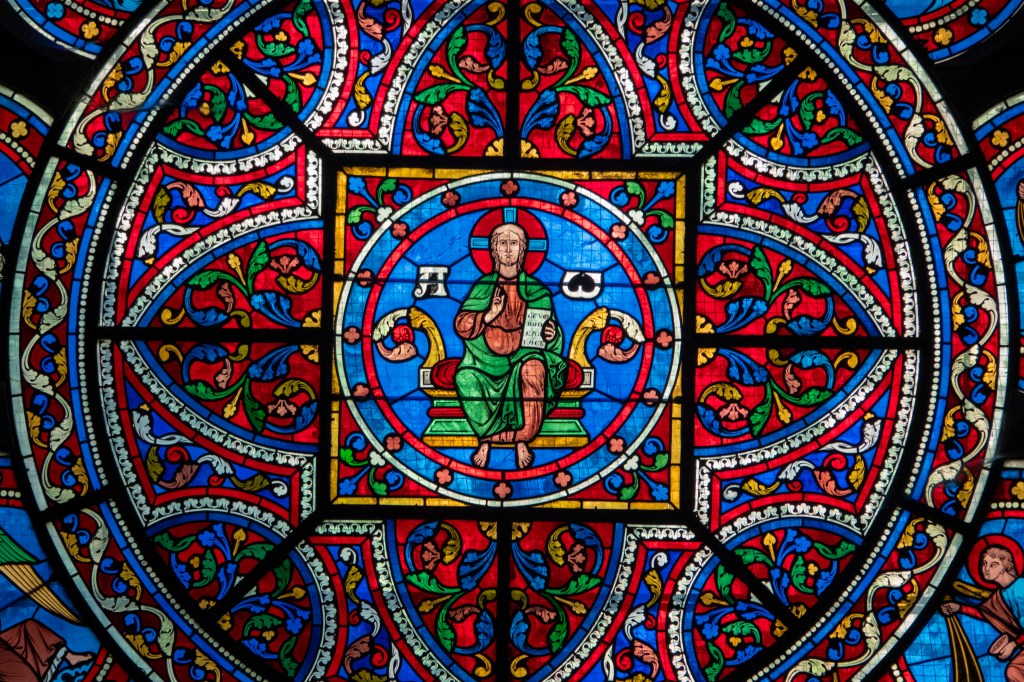
God lights our lamp with faith, and we cooperate with his grace to fill our oil flask with good works so that when the unknown hour comes, we may see the bridegroom’s face. But what happens at that moment? What happens when we cross from this life to the next?
If you are like me, we often don’t like to take the time to think about what happens at the moment of our death. It seems scary, perhaps a bit morbid, but it’s worth contemplating so that we know what is to come and we can keep ourselves prepared. Between Sacred Scripture and Church teaching we gain a good overview of what those moments look like.
At the final moment we face Death, Judgment, Heaven or Hell. How do we know that after death we will face judgment? Scripture makes several references to particular judgement, that is the personal judgement we all face after death. The clearest reference is in the Book of Hebrews, “And just as it is appointed for men to die once, and after that comes judgement.” (Hebrews 9:27) Here the author affirms that we are to die once and then face judgment. There is no waiting period or wandering about; we are to be immediately in front of the judgment seat of Christ.
The Catechism also affirms this position by stating, “Each man receives his eternal retribution in his immortal soul at the very moment of his death, in a particular judgement …” (CCC 1022) Again the Church affirms that at the moment of death we are at the judgement throne without any lingering or waiting here on earth. But what does the Catechism mean when it states, “Each man receives his eternal retribution.”? That is where we receive a just judgment from Christ based on our life and how we lived in accordance with our faith and works.
At judgement we are sent to either Heaven or Hell and that is where we will spend eternity. St. Paul states, “For we must all appear before the judgement seat of Christ, so that each one may receive good or evil, according to what he has done in the body.” (2 Corinthians 5:10) At judgement we receive our eternal destination for what we have done in this life and immediately enter either Heaven (directly or through Purgatory) or Hell.
Even after judgment there is still no time for wondering or “stuck” souls. The souls of the departed are immediately taken to their eternal destination. This can be seen through the Good Thief where Jesus says, “Truly, I say to you, today you will be with me in Paradise.” (Luke 23:43) Jesus didn’t say at the second coming or the fall of the temple you will be with me. Instead, Jesus immediately takes the Good Thief with him into paradise (Heaven). The same can be said about those sent to Hell as seen in the story of the Rich Man and Lazarus.
In the story we see that once the rich man dies he is immediately in Hell. St. Luke states, “The rich man also died and was buried; and in Hades, being in torment …” (Luke 16:22-23) The rich man had no time to wander; he was immediately cast into Hades based on the just judgement he received. Regardless of the destination after judgement we are immediately sent to our eternal destinations.
You might be wondering about a third place I’ve mentioned a couple times called Purgatory. Purgatory is similar to a transient destination that a soul may be sent to if they need purification before entering Heaven. The souls in Purgatory are assured of their eternal destination of heaven since they died in a state of grace but must be cleansed of all worldly attachments and the temporal punishment due to sin before entering Heaven. St. Paul writes, “If any man’s work is burned up, he will suffer loss, though he himself will be saved, but only as through fire.” (1 Corinthians 3:15) As St. Paul points out, we may have attachments to worldly things yet through cleansing we are still saved and purified to enter heaven.
I write this not to scare you dear reader, but to encourage you to turn your hearts and minds back towards God before we face the Last Four Things. For as long as we still have breath there is time to turn back to God with repentance and to let His mercy restore our soul so that we may not face the perils of Hell. St. Paul writes, “My desire is to depart and be with Christ, for that is far better. But to remain in the flesh is more necessary on your account.” (Philippians 1:23-24) Let us embody what St. Paul lived, let us desire to be with Christ when our times comes, but while we are here on earth let us be a witness to Christ for others. May we ask for the grace to see our errors and return to Christ who is there to meet us with open arms.

You must be logged in to post a comment.